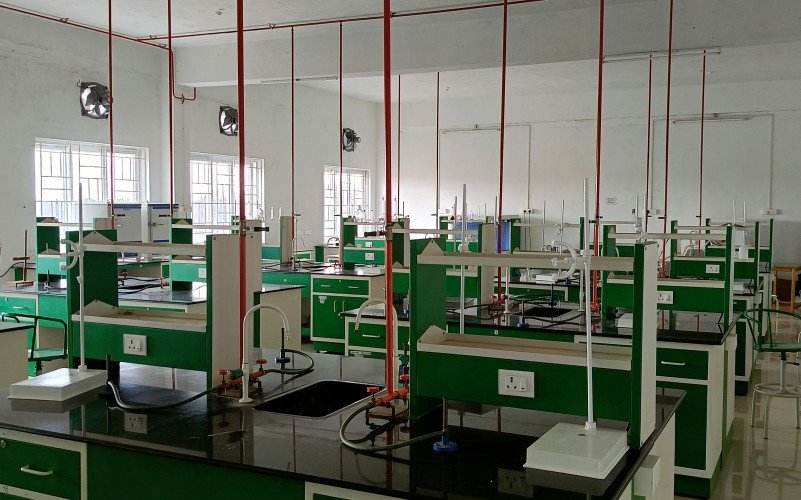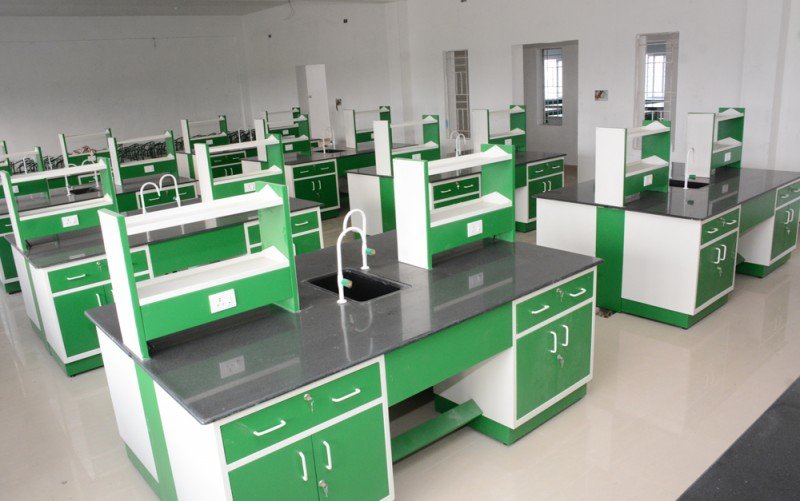
Environmental Science laboratory have many facilities such as estimating the nutrient content of soil and compost, analyzing the quality of water and wastewater. In this laboratory contains many instruments including pH Meter, EC Meter, Spectrophotometer, Flame photometer, Autoclave, Hot air oven, laminar air flow chamber, Microscope and BOD incubator. From these each instrument was used for analyzing specific parameters. As per the 2017 syllabus of B.Sc. (Hons.) Agriculture programme the following courses were handled in this laboratory viz., ENS 201 Environmental Studies and Disaster Management (2+1) and ENS 301 Environmental Pollution and Management. These two courses the students were learnt about how to analyze the physio-chemical and biological parameters of soil, water and wastewater for using the above mentioned instruments.
Here, we discussed the instruments and their analytical purpose. The physio-chemical parameters of soil and compost viz., pH, Electrical Conductivity using the instruments like pH meter and Electrical Conductivity meter. The fertility components of the soil and compost such as Available Phosphorous and Total Phosphorus were analyzed by spectrophotometer. Two more fertility components were Available Potassium and Total Potassium. These two parameters were analyzed by using flame photometer. The biological parameters of water and wastewater it includes Bacteria, fungi, actinomycetes and E.coli were isolated and enumerated by using the below listed equipments such as Autoclave, Hot air oven, Laminar air flow chamber and Microscope. The organic matter present in the wastewater was estimated by the method of Biological Oxygen Demand. In this estimation here we have the facility of BOD incubator.
Some hands on training programme were conducted to the students for improving them practical knowledge and also helps to motivate each person become the active entrepreneur.